

11: Quantum Strangeness
- Page ID
- 419510

\( \newcommand{\vecs}[1]{\overset { \scriptstyle \rightharpoonup} {\mathbf{#1}} } \)
\( \newcommand{\vecd}[1]{\overset{-\!-\!\rightharpoonup}{\vphantom{a}\smash {#1}}} \)
\( \newcommand{\dsum}{\displaystyle\sum\limits} \)
\( \newcommand{\dint}{\displaystyle\int\limits} \)
\( \newcommand{\dlim}{\displaystyle\lim\limits} \)
\( \newcommand{\id}{\mathrm{id}}\) \( \newcommand{\Span}{\mathrm{span}}\)
( \newcommand{\kernel}{\mathrm{null}\,}\) \( \newcommand{\range}{\mathrm{range}\,}\)
\( \newcommand{\RealPart}{\mathrm{Re}}\) \( \newcommand{\ImaginaryPart}{\mathrm{Im}}\)
\( \newcommand{\Argument}{\mathrm{Arg}}\) \( \newcommand{\norm}[1]{\| #1 \|}\)
\( \newcommand{\inner}[2]{\langle #1, #2 \rangle}\)
\( \newcommand{\Span}{\mathrm{span}}\)
\( \newcommand{\id}{\mathrm{id}}\)
\( \newcommand{\Span}{\mathrm{span}}\)
\( \newcommand{\kernel}{\mathrm{null}\,}\)
\( \newcommand{\range}{\mathrm{range}\,}\)
\( \newcommand{\RealPart}{\mathrm{Re}}\)
\( \newcommand{\ImaginaryPart}{\mathrm{Im}}\)
\( \newcommand{\Argument}{\mathrm{Arg}}\)
\( \newcommand{\norm}[1]{\| #1 \|}\)
\( \newcommand{\inner}[2]{\langle #1, #2 \rangle}\)
\( \newcommand{\Span}{\mathrm{span}}\) \( \newcommand{\AA}{\unicode[.8,0]{x212B}}\)
\( \newcommand{\vectorA}[1]{\vec{#1}} % arrow\)
\( \newcommand{\vectorAt}[1]{\vec{\text{#1}}} % arrow\)
\( \newcommand{\vectorB}[1]{\overset { \scriptstyle \rightharpoonup} {\mathbf{#1}} } \)
\( \newcommand{\vectorC}[1]{\textbf{#1}} \)
\( \newcommand{\vectorD}[1]{\overrightarrow{#1}} \)
\( \newcommand{\vectorDt}[1]{\overrightarrow{\text{#1}}} \)
\( \newcommand{\vectE}[1]{\overset{-\!-\!\rightharpoonup}{\vphantom{a}\smash{\mathbf {#1}}}} \)
\( \newcommand{\vecs}[1]{\overset { \scriptstyle \rightharpoonup} {\mathbf{#1}} } \)
\(\newcommand{\longvect}{\overrightarrow}\)
\( \newcommand{\vecd}[1]{\overset{-\!-\!\rightharpoonup}{\vphantom{a}\smash {#1}}} \)
\(\newcommand{\avec}{\mathbf a}\) \(\newcommand{\bvec}{\mathbf b}\) \(\newcommand{\cvec}{\mathbf c}\) \(\newcommand{\dvec}{\mathbf d}\) \(\newcommand{\dtil}{\widetilde{\mathbf d}}\) \(\newcommand{\evec}{\mathbf e}\) \(\newcommand{\fvec}{\mathbf f}\) \(\newcommand{\nvec}{\mathbf n}\) \(\newcommand{\pvec}{\mathbf p}\) \(\newcommand{\qvec}{\mathbf q}\) \(\newcommand{\svec}{\mathbf s}\) \(\newcommand{\tvec}{\mathbf t}\) \(\newcommand{\uvec}{\mathbf u}\) \(\newcommand{\vvec}{\mathbf v}\) \(\newcommand{\wvec}{\mathbf w}\) \(\newcommand{\xvec}{\mathbf x}\) \(\newcommand{\yvec}{\mathbf y}\) \(\newcommand{\zvec}{\mathbf z}\) \(\newcommand{\rvec}{\mathbf r}\) \(\newcommand{\mvec}{\mathbf m}\) \(\newcommand{\zerovec}{\mathbf 0}\) \(\newcommand{\onevec}{\mathbf 1}\) \(\newcommand{\real}{\mathbb R}\) \(\newcommand{\twovec}[2]{\left[\begin{array}{r}#1 \\ #2 \end{array}\right]}\) \(\newcommand{\ctwovec}[2]{\left[\begin{array}{c}#1 \\ #2 \end{array}\right]}\) \(\newcommand{\threevec}[3]{\left[\begin{array}{r}#1 \\ #2 \\ #3 \end{array}\right]}\) \(\newcommand{\cthreevec}[3]{\left[\begin{array}{c}#1 \\ #2 \\ #3 \end{array}\right]}\) \(\newcommand{\fourvec}[4]{\left[\begin{array}{r}#1 \\ #2 \\ #3 \\ #4 \end{array}\right]}\) \(\newcommand{\cfourvec}[4]{\left[\begin{array}{c}#1 \\ #2 \\ #3 \\ #4 \end{array}\right]}\) \(\newcommand{\fivevec}[5]{\left[\begin{array}{r}#1 \\ #2 \\ #3 \\ #4 \\ #5 \\ \end{array}\right]}\) \(\newcommand{\cfivevec}[5]{\left[\begin{array}{c}#1 \\ #2 \\ #3 \\ #4 \\ #5 \\ \end{array}\right]}\) \(\newcommand{\mattwo}[4]{\left[\begin{array}{rr}#1 \amp #2 \\ #3 \amp #4 \\ \end{array}\right]}\) \(\newcommand{\laspan}[1]{\text{Span}\{#1\}}\) \(\newcommand{\bcal}{\cal B}\) \(\newcommand{\ccal}{\cal C}\) \(\newcommand{\scal}{\cal S}\) \(\newcommand{\wcal}{\cal W}\) \(\newcommand{\ecal}{\cal E}\) \(\newcommand{\coords}[2]{\left\{#1\right\}_{#2}}\) \(\newcommand{\gray}[1]{\color{gray}{#1}}\) \(\newcommand{\lgray}[1]{\color{lightgray}{#1}}\) \(\newcommand{\rank}{\operatorname{rank}}\) \(\newcommand{\row}{\text{Row}}\) \(\newcommand{\col}{\text{Col}}\) \(\renewcommand{\row}{\text{Row}}\) \(\newcommand{\nul}{\text{Nul}}\) \(\newcommand{\var}{\text{Var}}\) \(\newcommand{\corr}{\text{corr}}\) \(\newcommand{\len}[1]{\left|#1\right|}\) \(\newcommand{\bbar}{\overline{\bvec}}\) \(\newcommand{\bhat}{\widehat{\bvec}}\) \(\newcommand{\bperp}{\bvec^\perp}\) \(\newcommand{\xhat}{\widehat{\xvec}}\) \(\newcommand{\vhat}{\widehat{\vvec}}\) \(\newcommand{\uhat}{\widehat{\uvec}}\) \(\newcommand{\what}{\widehat{\wvec}}\) \(\newcommand{\Sighat}{\widehat{\Sigma}}\) \(\newcommand{\lt}{<}\) \(\newcommand{\gt}{>}\) \(\newcommand{\amp}{&}\) \(\definecolor{fillinmathshade}{gray}{0.9}\)
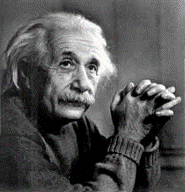
In the television show “The Big Bang Theory”, Dr. Sheldon Cooper describes the best use of his time as a scientist to “employ his rare and precious mental faculties to tear the mask off of nature and stare at the face of God.” [1] And while the fictitious character may have an inflated view of the magnitude of his research efforts, he is not in poor company in terms of the feelings that science is a tool to be used to see the nature of God in nature itself. Albert Einstein is quoted as saying “Science without religion is lame. Religion without science is blind.” [2] Another quote attributed to Einstein is, “I want to know God’s thoughts; the rest is just details.” [3] Of course, Einstein claimed some familiarity with the intentions of the Creator when he quipped in a letter to Max Born, “Quantum mechanics is certainly imposing. But an inner voice tells me that it is not yet the real thing. The theory says a lot, but does not really bring us any closer to the secret of the "old one." I, at any rate, am convinced that He does not throw dice.” [4]
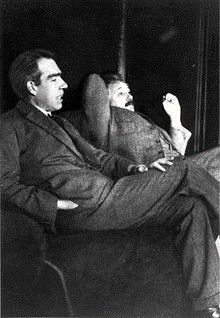
Much has been made of Einstein’s opinions of God as a craps player. Through the 1920s and 1930s, Einstein and Niels Bohr had many conversations on the ramifications of the quantum theory. In response to Einstein’s quip about a non-dice-playing deity, Bohr is said to have responded, “Einstein, stop telling God what to do!”1 Of course, Bohr was very well aware of the strangeness of the quantum theory and how it shook the very roots of conventional wisdom about nature. Bohr is quoted as saying, “Anyone who is not shocked by quantum theory has not understood it.” [5]
Naturally, Einstein found quantum theory quite shocking indeed. One of his earliest objections was that the quantum theory required that one dismiss a deterministic view of the universe. The philosophy of Determinism states that if all is known about a system at one point in time, then all can be known about that system at all points in time. Bohr, on the other hand, had no difficulties in dismissing determinism in favor of a quantum theory. Eventually, the debate would focus on the indeterminacy predicted by the Heisenberg Uncertainty Principle for complimentary variables (variables for which the corresponding quantum mechanical operators do not commute, such as position and momentum.)

In fact, the spirited (but mostly amiable) debates between Einstein and Bohr did the development of quantum theory an enormous service. (not all of Bohr’s debates were amiable. Some of his discussions with Werner Heisenberg left Heisenberg reportedly in tears! Heisenberg said of these discussions, “Since my talks with Bohr often continued till long after midnight and did not produce a satisfactory conclusion, ...both of us became utterly exhausted and rather tense.”) [6]
By poking at the forefronts of what the theory predicts and what it can not predict, the Bohr-Einstein debates pushed quantum theory forward by enormous leaps. In this chapter, we will examine how various people have probed the “strangeness” of the quantum theory and the bizarre behavior it predicts (or in some cases, the bizarre behavior that was discovered almost by accident.) Much of the strangeness of quantum mechanics continues to be researched actively and colors such important topics as quantum communications and quantum computing.
- The Big Bang Theory, CBS Television, 2011. W430W9405
- A. Einstein, "Science, Philosphy, and Religion: a Symposium," 1941. W430W9405
- E. Salaman, "A Talk with Einstein," The Listener, vol. 54, pp. 370-371, 1955. W430W9405
- A. Einstein, "Letter to Max Born (4 December 1926)," in The Born-Einstein Letters, New York, Walker and Company, 1971. W430W9405
- K. Barad, Meeting the Universe Halfway: Quantum Physics and the Entanglement of Matter and Meaning, Duke University Press Books, 2007, p. 254.W430W9405
- D. C. Cassidy, "Triumph of the Copenhagen Interpretation (1925-1927)," American Institute of Physics, [Online]. Available: https://history.aip.org/exhibits/hei...g/triumph.html. [Accessed 4 October 2022].W430W9405
Thumbnail: The Stern-Gerlach experiment. (CC BY-SA 4.- Internationl; Tatoute via Wikipedia; Modified by LibreTexts).