

Complications of Chemical Compounds in the Brain, Based on Molecular Composition
- Page ID
- 418946
\( \newcommand{\vecs}[1]{\overset { \scriptstyle \rightharpoonup} {\mathbf{#1}} } \)
\( \newcommand{\vecd}[1]{\overset{-\!-\!\rightharpoonup}{\vphantom{a}\smash {#1}}} \)
\( \newcommand{\dsum}{\displaystyle\sum\limits} \)
\( \newcommand{\dint}{\displaystyle\int\limits} \)
\( \newcommand{\dlim}{\displaystyle\lim\limits} \)
\( \newcommand{\id}{\mathrm{id}}\) \( \newcommand{\Span}{\mathrm{span}}\)
( \newcommand{\kernel}{\mathrm{null}\,}\) \( \newcommand{\range}{\mathrm{range}\,}\)
\( \newcommand{\RealPart}{\mathrm{Re}}\) \( \newcommand{\ImaginaryPart}{\mathrm{Im}}\)
\( \newcommand{\Argument}{\mathrm{Arg}}\) \( \newcommand{\norm}[1]{\| #1 \|}\)
\( \newcommand{\inner}[2]{\langle #1, #2 \rangle}\)
\( \newcommand{\Span}{\mathrm{span}}\)
\( \newcommand{\id}{\mathrm{id}}\)
\( \newcommand{\Span}{\mathrm{span}}\)
\( \newcommand{\kernel}{\mathrm{null}\,}\)
\( \newcommand{\range}{\mathrm{range}\,}\)
\( \newcommand{\RealPart}{\mathrm{Re}}\)
\( \newcommand{\ImaginaryPart}{\mathrm{Im}}\)
\( \newcommand{\Argument}{\mathrm{Arg}}\)
\( \newcommand{\norm}[1]{\| #1 \|}\)
\( \newcommand{\inner}[2]{\langle #1, #2 \rangle}\)
\( \newcommand{\Span}{\mathrm{span}}\) \( \newcommand{\AA}{\unicode[.8,0]{x212B}}\)
\( \newcommand{\vectorA}[1]{\vec{#1}} % arrow\)
\( \newcommand{\vectorAt}[1]{\vec{\text{#1}}} % arrow\)
\( \newcommand{\vectorB}[1]{\overset { \scriptstyle \rightharpoonup} {\mathbf{#1}} } \)
\( \newcommand{\vectorC}[1]{\textbf{#1}} \)
\( \newcommand{\vectorD}[1]{\overrightarrow{#1}} \)
\( \newcommand{\vectorDt}[1]{\overrightarrow{\text{#1}}} \)
\( \newcommand{\vectE}[1]{\overset{-\!-\!\rightharpoonup}{\vphantom{a}\smash{\mathbf {#1}}}} \)
\( \newcommand{\vecs}[1]{\overset { \scriptstyle \rightharpoonup} {\mathbf{#1}} } \)
\(\newcommand{\longvect}{\overrightarrow}\)
\( \newcommand{\vecd}[1]{\overset{-\!-\!\rightharpoonup}{\vphantom{a}\smash {#1}}} \)
\(\newcommand{\avec}{\mathbf a}\) \(\newcommand{\bvec}{\mathbf b}\) \(\newcommand{\cvec}{\mathbf c}\) \(\newcommand{\dvec}{\mathbf d}\) \(\newcommand{\dtil}{\widetilde{\mathbf d}}\) \(\newcommand{\evec}{\mathbf e}\) \(\newcommand{\fvec}{\mathbf f}\) \(\newcommand{\nvec}{\mathbf n}\) \(\newcommand{\pvec}{\mathbf p}\) \(\newcommand{\qvec}{\mathbf q}\) \(\newcommand{\svec}{\mathbf s}\) \(\newcommand{\tvec}{\mathbf t}\) \(\newcommand{\uvec}{\mathbf u}\) \(\newcommand{\vvec}{\mathbf v}\) \(\newcommand{\wvec}{\mathbf w}\) \(\newcommand{\xvec}{\mathbf x}\) \(\newcommand{\yvec}{\mathbf y}\) \(\newcommand{\zvec}{\mathbf z}\) \(\newcommand{\rvec}{\mathbf r}\) \(\newcommand{\mvec}{\mathbf m}\) \(\newcommand{\zerovec}{\mathbf 0}\) \(\newcommand{\onevec}{\mathbf 1}\) \(\newcommand{\real}{\mathbb R}\) \(\newcommand{\twovec}[2]{\left[\begin{array}{r}#1 \\ #2 \end{array}\right]}\) \(\newcommand{\ctwovec}[2]{\left[\begin{array}{c}#1 \\ #2 \end{array}\right]}\) \(\newcommand{\threevec}[3]{\left[\begin{array}{r}#1 \\ #2 \\ #3 \end{array}\right]}\) \(\newcommand{\cthreevec}[3]{\left[\begin{array}{c}#1 \\ #2 \\ #3 \end{array}\right]}\) \(\newcommand{\fourvec}[4]{\left[\begin{array}{r}#1 \\ #2 \\ #3 \\ #4 \end{array}\right]}\) \(\newcommand{\cfourvec}[4]{\left[\begin{array}{c}#1 \\ #2 \\ #3 \\ #4 \end{array}\right]}\) \(\newcommand{\fivevec}[5]{\left[\begin{array}{r}#1 \\ #2 \\ #3 \\ #4 \\ #5 \\ \end{array}\right]}\) \(\newcommand{\cfivevec}[5]{\left[\begin{array}{c}#1 \\ #2 \\ #3 \\ #4 \\ #5 \\ \end{array}\right]}\) \(\newcommand{\mattwo}[4]{\left[\begin{array}{rr}#1 \amp #2 \\ #3 \amp #4 \\ \end{array}\right]}\) \(\newcommand{\laspan}[1]{\text{Span}\{#1\}}\) \(\newcommand{\bcal}{\cal B}\) \(\newcommand{\ccal}{\cal C}\) \(\newcommand{\scal}{\cal S}\) \(\newcommand{\wcal}{\cal W}\) \(\newcommand{\ecal}{\cal E}\) \(\newcommand{\coords}[2]{\left\{#1\right\}_{#2}}\) \(\newcommand{\gray}[1]{\color{gray}{#1}}\) \(\newcommand{\lgray}[1]{\color{lightgray}{#1}}\) \(\newcommand{\rank}{\operatorname{rank}}\) \(\newcommand{\row}{\text{Row}}\) \(\newcommand{\col}{\text{Col}}\) \(\renewcommand{\row}{\text{Row}}\) \(\newcommand{\nul}{\text{Nul}}\) \(\newcommand{\var}{\text{Var}}\) \(\newcommand{\corr}{\text{corr}}\) \(\newcommand{\len}[1]{\left|#1\right|}\) \(\newcommand{\bbar}{\overline{\bvec}}\) \(\newcommand{\bhat}{\widehat{\bvec}}\) \(\newcommand{\bperp}{\bvec^\perp}\) \(\newcommand{\xhat}{\widehat{\xvec}}\) \(\newcommand{\vhat}{\widehat{\vvec}}\) \(\newcommand{\uhat}{\widehat{\uvec}}\) \(\newcommand{\what}{\widehat{\wvec}}\) \(\newcommand{\Sighat}{\widehat{\Sigma}}\) \(\newcommand{\lt}{<}\) \(\newcommand{\gt}{>}\) \(\newcommand{\amp}{&}\) \(\definecolor{fillinmathshade}{gray}{0.9}\)- This Exemplar will teach the following concept(s) from the ACS Examinations Institute General Chemistry ACCM:
III.B.2.a. Lewis structures are an important model that allows one to keep track of bonding and nonbonding pairs of electrons in molecules
III.D. Symmetry, based on geometry, plays an important role in how atoms interact within molecules and how molecules are observed in many experiments.
III.E. Three-dimensional structures may give rise to chirality, which can play an important role in observed chemical and physical properties.
Molecular Geometry of Chemical Compounds
The molecular structure is the three-dimensional arrangement of atoms in a molecule. Understanding the molecular structure of chemical compounds and their geometric structures influences the chemical and physical behaviors of the molecules as well as their neurological and biological activity.

Figure 1: An image showing neurotransmitters passing to receptors between synapses
Background
Have you ever experienced anxiety? So have another 6.8 million1 Americans, and a nuanced reason for this occurrence is due to a lack of GABA, which has shown abilities to aid “feelings of anxiety, stress, or fear” 11.
There are seven major neuro-receptors the primary one that will be discussed in this article is GABA. GABA A receptors specifically maintain the capacity to bind with several drugs, including but not limited to muscimol found in particular kinds of mushrooms10, gaboxadol an experimental sleep-drug aid8, ethanol11, and bicuculline which prevents GABA from attaching to GABA A receptors6. Although this may seem arbitrary at first glance, there are many implications that these simple mix-ups can retain if used in an improper manner; for example, the chemical ethanol, more commonly known as alcohol, depletes the production of GABA, which has the capacity to cause short- and long-term effects that can manifest in severe mental health symptoms, one of the most prevalent being anxiety which affects roughly 3.1% of the U.S. population and often occurs in conjunction with major depression2.
Although the molecule composition can seem minuscule in comparison to the bigger picture of chemistry and neuroscience, it is one of the most imperative characteristics to determining whether a substance can be helpful or harmful to your overall health.
Introduction
Before we can begin to derive the larger physical effects of molecular composition and geometry, we must become acquainted with the Lewis electron dot structure, 3D modeling, and skeletal structures to determine the molecular structure. Although Lewis structures do not determine the shapes of molecules, in conjunction with the skeletal and 3D/wedge-line modeling, our ability to predict the true shapes of molecules increases exponentially. The Lewis structure helps us identify the bond pairs and the lone pairs. Then, in 3D modeling, we can determine the hybridization and comprehensive mechanics of the molecules, and finally, the skeletal structures allow us to put these ideas together on paper to draw a more comprehensive molecular compound.
To identify and have a complete description of the three-dimensional shape of a molecule, we need to know also learn about bond angles, types of hybridization and practice recognizing minute differences between molecular compounds as well. Click the link above to learn how to draw a Lewis electron dot structure, 3D model, or skeletal structure.
Additionally, this exemplar will focus primarily on three main concepts covered in Zumdahl and DeCoste’s Chemical Principles - 8e. Models exist that allow the prediction of the shape of chemicals about any bonding atom in a molecule. Symmetry, based on geometry, plays an important role in how atoms interact within molecules and how molecules are observed in many experiments. Three-dimensional structures may give rise to chirality, which can play an important role in observed chemical and physical properties. For additional aid with learning, understanding, or practicing these topics click one of the first three links in the Further Reading section.
|
|
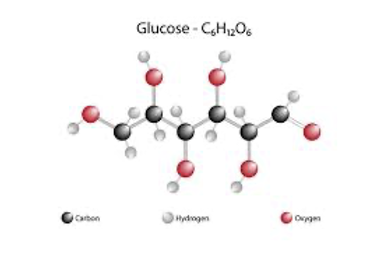
Glucose Molecular Structure |
|
|
Lewis Structure |
Wedge-Line Structure |
3D Structure |
|
|
|
|


Chemical Composition and Why it Matters
The chemical composition and shape of molecules have a crucial role in neuro-medicine. In cases of synaptic transmission malfunctions, scientists heavily rely on the shapes of molecules to develop solutions. This can be attributed to the fact that synaptic transmission heavily relies on molecules binding to one another for something to occur. Enzymes require a molecule to have a specific complementary shape and structure to its active site, or the reaction will simply not occur.
Scientists incorporated the ideas of molecule shape and composition when developing anticonvulsant drugs to treat toxin-induced seizures.
Some toxins such as heavy metals, pesticides, insecticides, and commonly used drugs such as antihistamines and antidepressants have been found to cause seizures. Moreover, long-term exposure to toxins can lead to chronic toxic encephalopathy, which maintains its symptoms, one of the most severe being chronic seizures.
Although chronic toxic encephalopathy (CTE) does not have a one-time cure, the medical field has incorporated the ideas behind the shapes of molecules and chemical composition to produce drugs that suppress seizures. CTE is now treated with anticonvulsant medication7.
An example of an anticonvulsant medication is vigabatrin. Vigabatrin was designed specifically to be a similar shape to another molecule, GABA, which is a molecule that acts as an inhibitory neurotransmitter in the brain which blocks some signaling, having an overall stabilizing, calming effect7. Vigabatrin binds to GABA-aminotransferase, an enzyme responsible for GABA breakdown, and inhibits its action. This increases GABA concentration in the brain, resulting in more controlled, stabilized electrical activity in the brain.
References
- Facts & Statistics: Anxiety and Depression Association of America, ADAA. https://adaa.org/understanding-anxie...cts-statistics (accessed Dec 7, 2022).
- Georgetown. GABA and alcohol: How drinking leads to anxiety: Georgetown behavioral. https://www.gbhoh.com/gaba-and-alcoh...ds-to-anxiety/ (accessed Dec 7, 2022).
- Grill, M. F., & Maganti, R. K. (2011, September). Neurotoxic effects associated with antibiotic use: Management considerations. British journal of clinical pharmacology. Retrieved November 11, 2022, from https://www.ncbi.nlm.nih.gov/pmc/articles/PMC3175508/
- Gökcan, H. M. (2016, July 1). Molecular dynamics simulations of Apo, Holo, and inactivator bound gaba‐at reveal the role of active site residues in PLP dependent enzymes, proteins: Structure function and bioinformatics. DeepDyve. Retrieved November 11, 2022, from https://www.deepdyve.com/lp/wiley/mo...aba-S02sgNs00O
- Johnston, G. A. R. Advantages of an antagonist: Bicuculline and other GABA antagonists. https://www.ncbi.nlm.nih.gov/pmc/articles/PMC3651659/ (accessed Dec 7, 2022).
- Lankford, D. A.; Corser, B. C.; Zheng, Y.-P.; Li, Z.; Snavely, D. B.; Lines, C. R.; Deacon, S.
- Kim, Y.; Kim, J. W. Toxic encephalopathy. https://www.ncbi.nlm.nih.gov/pmc/art...heavy%20metals (accessed Dec 7, 2022).
- Effect of gaboxadol on sleep in adult and elderly patients with primary insomnia: Results from two randomized, placebo-controlled, 30-night polysomnography studies. https://www.ncbi.nlm.nih.gov/pmc/articles/PMC2572741/ (accessed Dec 7, 2022).
- Mechanism of action of vigabatrin: Correcting misperceptions. (2011, November 8). Retrieved November 11, 2022, from https://onlinelibrary.wiley.com/doi/10.1111/j.1600-0404.2011.01596.x
- Muscimol. https://pubchem.ncbi.nlm.nih.gov/compound/Muscimol (accessed Dec 7, 2022).
- Network, the H. M. Gamma aminobutyric acid: Uses and side effects of GABA supplement. https://www.healthline.com/health/ga...d#What-is-GABA? (accessed Dec 7, 2022).
- SJ;, C. P. B. B. C. (n.d.). Mechanisms of action of Antiepileptic Drugs. Current topics in medicinal chemistry. Retrieved November 11, 2022, from https://pubmed.ncbi.nlm.nih.gov/1563...inotransferase
Further Reading
Concept Questions


a.Determine the molecular geometry of each carbon on GABA. (Numbered orange carbons from left to right).
b. Determine the molecular geometry of each carbon on Vigabatrin.
c. Draw the wedge-line model for NH2CHCH2COOH with N as the central atom and then build the model in WebMo and compare your drawing.
- Answer
-
In order to determine the geometry of a molecule, it needs to be determined:
i. How many atoms or molecules are bonded to the central atom
ii. How many lone pairs are present on the central atom?
GABA
Carbon
Steric #
Lone pairs #
Molecular Geometry
C1
4
0
Tetrahedral
C2
4
0
Tetrahedral
C3
3
0
Trigonal Planar
Vigabatrin
Carbon
Steric #
Lone pairs #
Molecular Geometry
C1
3
0
Trigonal Planar
C2
3
0
Trigonal Planar
C3
4
0
Tetrahedral
C4
4
0
Tetrahedral
C5
3
0
Trigonal Planar


Structure of PLP for reference
Examine the active site of GABA-At with Vigabatrin bound to it. What is the significance of the chemical composition of GABA and Vigabatrin in allowing them both to bind to the enzyme's active site? Does chemical composition affect the bonding exhibited by the two? What type of bonding do you observe inside the active site? Describe how the bond formed Vigabatrin and PLP, Vigabatrin and Lys329.
- Answer
-
Hydrogen bonds are formed with the specific molecules of the active site. Hydrogen bonds can only form with N-H, O-H, F-H. This indicates that the presence of Oxygen in both molecules has great significance in being able to bind to the enzyme. The bonding present in the active site is Hydrogen bonding and covalent bonding. The bonding between Vigabatrin and PLP and Lys329 occurred by the -NH2 group on the molecule donating its lone pair to the carbon on PLP/Lys329 to form a bond. The reason why Vigabatrin and GABA are able to bind, is the placement of molecules/geometric shape of the molecule which allows it to form hydrogen bonds with the specific components of the active site.
Draw a Lewis dot diagram for COOH-
- Answer
-
