

5.E: Covalent Bonding and Simple Molecular Compounds (Exercises)-
- Page ID
- 526036

\( \newcommand{\vecs}[1]{\overset { \scriptstyle \rightharpoonup} {\mathbf{#1}} } \)
\( \newcommand{\vecd}[1]{\overset{-\!-\!\rightharpoonup}{\vphantom{a}\smash {#1}}} \)
\( \newcommand{\dsum}{\displaystyle\sum\limits} \)
\( \newcommand{\dint}{\displaystyle\int\limits} \)
\( \newcommand{\dlim}{\displaystyle\lim\limits} \)
\( \newcommand{\id}{\mathrm{id}}\) \( \newcommand{\Span}{\mathrm{span}}\)
( \newcommand{\kernel}{\mathrm{null}\,}\) \( \newcommand{\range}{\mathrm{range}\,}\)
\( \newcommand{\RealPart}{\mathrm{Re}}\) \( \newcommand{\ImaginaryPart}{\mathrm{Im}}\)
\( \newcommand{\Argument}{\mathrm{Arg}}\) \( \newcommand{\norm}[1]{\| #1 \|}\)
\( \newcommand{\inner}[2]{\langle #1, #2 \rangle}\)
\( \newcommand{\Span}{\mathrm{span}}\)
\( \newcommand{\id}{\mathrm{id}}\)
\( \newcommand{\Span}{\mathrm{span}}\)
\( \newcommand{\kernel}{\mathrm{null}\,}\)
\( \newcommand{\range}{\mathrm{range}\,}\)
\( \newcommand{\RealPart}{\mathrm{Re}}\)
\( \newcommand{\ImaginaryPart}{\mathrm{Im}}\)
\( \newcommand{\Argument}{\mathrm{Arg}}\)
\( \newcommand{\norm}[1]{\| #1 \|}\)
\( \newcommand{\inner}[2]{\langle #1, #2 \rangle}\)
\( \newcommand{\Span}{\mathrm{span}}\) \( \newcommand{\AA}{\unicode[.8,0]{x212B}}\)
\( \newcommand{\vectorA}[1]{\vec{#1}} % arrow\)
\( \newcommand{\vectorAt}[1]{\vec{\text{#1}}} % arrow\)
\( \newcommand{\vectorB}[1]{\overset { \scriptstyle \rightharpoonup} {\mathbf{#1}} } \)
\( \newcommand{\vectorC}[1]{\textbf{#1}} \)
\( \newcommand{\vectorD}[1]{\overrightarrow{#1}} \)
\( \newcommand{\vectorDt}[1]{\overrightarrow{\text{#1}}} \)
\( \newcommand{\vectE}[1]{\overset{-\!-\!\rightharpoonup}{\vphantom{a}\smash{\mathbf {#1}}}} \)
\( \newcommand{\vecs}[1]{\overset { \scriptstyle \rightharpoonup} {\mathbf{#1}} } \)
\(\newcommand{\longvect}{\overrightarrow}\)
\( \newcommand{\vecd}[1]{\overset{-\!-\!\rightharpoonup}{\vphantom{a}\smash {#1}}} \)
\(\newcommand{\ket}[1]{\left| #1 \right>}\)
\(\newcommand{\bra}[1]{\left< #1 \right|}\)
\(\newcommand{\braket}[2]{\left< #1 \vphantom{#2} \right| \left. #2 \vphantom{#1} \right>}\)
\(\newcommand{\braopket}[3]{\left< #1 \vphantom{#2}\vphantom{#3} \right| #2 \vphantom{#1}\vphantom{#3} \left| #3 \vphantom{#1}\vphantom{#2} \right>}\)
\(\newcommand{\qmvec}[1]{\mathbf{\vec{#1}}}\)
\(\newcommand{\op}[1]{\hat{\mathbf{#1}}}\)
\(\newcommand{\expect}[1]{\langle #1 \rangle}\)
\(\newcommand{\dfn}[1]{\emph{\textbf{#1}}}\)
5.1 Covalent Bonds
PROBLEM 5-1 How is a covalent bond formed between two atoms?
PROBLEM 5-2 How does covalent bonding allow atoms in group 6A to satisfy the octet rule?
PROBLEM 5-3 Identify whether each compound(s) is/are ionic.
- NaI
- Au2CO3
- N2O
- SiO2
- Answer
-
Only answers (a) and (b) are ionic compounds. Both formulas begin with a metal (atom from the left side of the periodic table) ion.
PROBLEM 5-4 Identify whether each compound(s) is/are covalent.
- SiH3
- C6H5Cl
- KC2H3O2
- Ca(OH)2
- Answer
-
Only answers (a) and (b) are covalent compounds. Both formulas begin with nonmetals and/or metalloids (atoms from the right side of the table)
PROBLEM 5-5 Predict the number of covalent bonds formed by each nonmetal atom.
| Atom | N | Cl | C | O | Br | H |
| # Covalent Bonds |
5.2: Drawing Lewis Structures
PROBLEM 5-6 Draw the Lewis diagram for the covalent bond in:
- The H2 molecule.
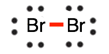
- Draw the Lewis diagram for the covalent bond in the Br2 molecule.
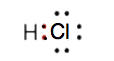
- Draw the Lewis diagram for the covalent bond in the HCl molecule.
- Why do hydrogen atoms not follow the octet rule when they form covalent bonds?
PROBLEM 5-7 Draw the Lewis diagram for the covalent bonding in
- H2S. How many bonding electrons and non-bonding electrons are in the molecule?
- CF4. How many bonding electrons and non-bonding electrons are in the molecule?
- PCl3. How many bonding electrons and non-bonding electrons are in the molecule?
PROBLEM 5-8 Each molecule contains double bonds. Draw the Lewis diagram for each. The first element is the central atom.
- CS2
- C2F4
- COCl2
PROBLEM 5-9 Each molecule contains multiple bonds. Draw the Lewis diagram for each. Assume that the first element is the central atom, unless otherwise noted.
- N2
- CO
- HCN (The carbon atom is the central atom.)
- POCl (The phosphorus atom is the central atom.)
5.3 Naming Covalent Compounds
PROBLEM 5-10 Write the formula for each covalent compound.
- iodine trichloride
- disulfur dibromide
- arsenic trioxide
- xenon hexafluoride
- chlorine trifluoride
- phosphorus pentachloride
- sulfur dioxide
- nitrogen dioxide
- dioxygen difluoride
- dinitrogen pentoxide
- sulfur hexafluoride
- nitrogen monoxide
PROBLEM 5-11 Write the name for each covalent compound.
- SiF4
- NO2
- CS2
- P2O5
- CO
- S2O3
- BF3
- GeS2
5.8 Unequal Sharing- Polar Covalent Bonds
PROBLEM 5-21 What is the name for the distance between two atoms in a covalent bond?
PROBLEM 5-22 What does the electronegativity of an atom indicate?
PROBLEM 5-23 Using the Figure from section 5.8, determine which atom in each pair has the higher electronegativity.
- H or C
- O or Br
- Na or Rb
- I or Cl
PROBLEM 5-24 Using the Figure from section 5.8, determine which atom in each pair has the lower electronegativity.
- Mg or O
- S or F
- Al or Ga
- O or I
PROBLEM 5-25 Will the electrons be shared equally or unequally across each covalent bond? If unequally, to which atom are the electrons more strongly drawn?
- a C–O bond
- an F–F bond
- an S–N bond
- An I–Cl bond
PROBLEM 5-26 Will the electrons be shared equally or unequally across each covalent bond? If unequally, to which atom are the electrons more strongly drawn?
- a C–C bond
- a S–Cl bond
- an O–H bond
- an H–H bond
PROBLEM 5-27 Arrange the following bonds from least polar to most polar: H-F, H-N, H-O, H-C
PROBLEM 5-28 Arrange the following bonds from least polar to most polar: C-F, C-N, C-O, C-C
Solution of Selected Problems
PROBLEM 5-6
a-
 b-

 c-

d-Hydrogen atoms follow the duet rule (not the octet rule). This is because it has only one shell and this shell can only hold 2 electrons.
PROBLEM 5-7
a- bonding electrons: 4; nonbonding electrons: 4
 bonding electrons: 8; nonbonding electrons: 24
c- 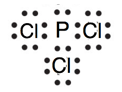 bonding electrons: 6; nonbonding electrons: 20
PROBLEM 5-8
a. b.
 c.

PROBLEM 5-9
a.  b.
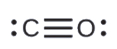 c.
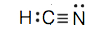 d.
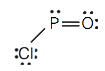
PROBLEM 5-10
a. ICl3 b. S2Br2 c. AsO3 d. XeF6 e. ClF3 f. PCl5 g. SO2 h. NO2 i. O2F2 j. N2O5 k. SF6 l. NO
PROBLEM 5-11
- silicon tetrafluoride
- nitrogen dioxide
- carbon disulfide
- diphosphorus pentoxide
- carbon monoxide
- disulfur trioxide
- boron trifluoride
- germanium disulfide
5.8 Unequal Sharing- Polar Covalent Bonds
PROBLEM 5-21 Electronegativity is a qualitative measure of how much an atom attracts electrons in a covalent bond.
PROBLEM 5-22 nonpolar; polar; ionic
PROBLEM 5-23
- C
- O
- Na
- Cl
PROBLEM 5-24
- Mg
- S
- Al
- I
PROBLEM 5-25
- unequally toward the O
- equally
- unequally toward the N
- unequally toward the Cl
PROBLEM 5-26
- equally
- unequally toward the Cl
- unequally toward the O
- equally
PROBLEM 5-27 The electronegativity difference increases from 0.4; 0.9; 1.4; 1.9. Hence, the least to most polar: H-C, H-N, H-O, H-F
PROBLEM 5-28 The electronegativity difference increases from 0; 0.5; 1.0; 1.5. Hence, the least to most polar: C-C, C-N, C-O, C-F